
modern Aerospace Engineering
New technologies in the construction of unmanned aerial vehicles
About project
Millions of landmines lies underground in 80 countries, which is in every third country in the world – from Angola to Afghanistan, from Vietnam to Zimbabwe. According to official data, in 2002 a nearly 12000 people died or were mutilated as a result of mines and other explosive devices.
Despite the signing of the Ottawa Convention in 1997, minefields are created in areas of emerging conflicts. There are countries that have not signed it, so the citizens of the countries where military interventions take place cannot feel safe.
Landmines are weapons of mass destruction in slow motion. By their nature, they do not discriminate against civilians or combatants, and they also violate international humanitarian law.
Pol Pot, who killed 1.7 million Cambodian civilians in the years 1975–1979, called the landmines „ideal soldiers”: they never sleep, they wait with boundless patience.
Never in history we have had a chance to destroy an entire army of these „ideal soldiers” so quickly and efficiently. In the era of advanced autonomous technology, it is possible to build a reconnaissance aircraft that will detect threats and inform other sapper robots about them. We are talking about an autonomous aircraft that will detect mines from above the ground.
The market for unmanned aerial vehicles is constantly growing, and the drones themselves are becoming more and more technologically advanced. In 2019, the total investments related to the drone sector amounted to USD 1 billion, and the expected value of the drone market by 2026 is to amount to USD 58 billion.
Law regulations in this matter will drive the UAV market even more forward.
On the other hand, we have a strong tendency to transform the energy market towards renewable fuels, including hydrogen-based fuels. The market for hydrogen cells is expected to grow almost three times by 2050.
Being aware of the above global trends, we create a team of engineers and visionaries who have the goal – to create a drone with fixed wings powered by a hydrogen cell, which is part of a modern autonomous aircraft system.
The many advantages of this alternative power supply anticipates a bright future for this type of drones.
Taking into account the development of autonomous systems, modern renewable energy sources and systems that allows the energy to be taken directly from the sun, we have components for a maintenance-free aircraft that is also an automatic sapper …
Our goal is to build various types of drones based on power sources alternative to electric batteries, in particular to build an autonomous unmanned aerial vehicle powered by a hydrogen cell.
As the first stage, we aim to make a specialized drone that will hover low above the ground at a limited speed. As the altitude descends, the horizontal speed of the aircraft must decrease. This is to reduce the risk of damage to the aircraft as well as objects or living organisms on the ground. The second aspect already closely related to the function of the drone is the higher efficiency of scanning the terrain as it lowers the horizontal speed relative to the ground.
At the first stage
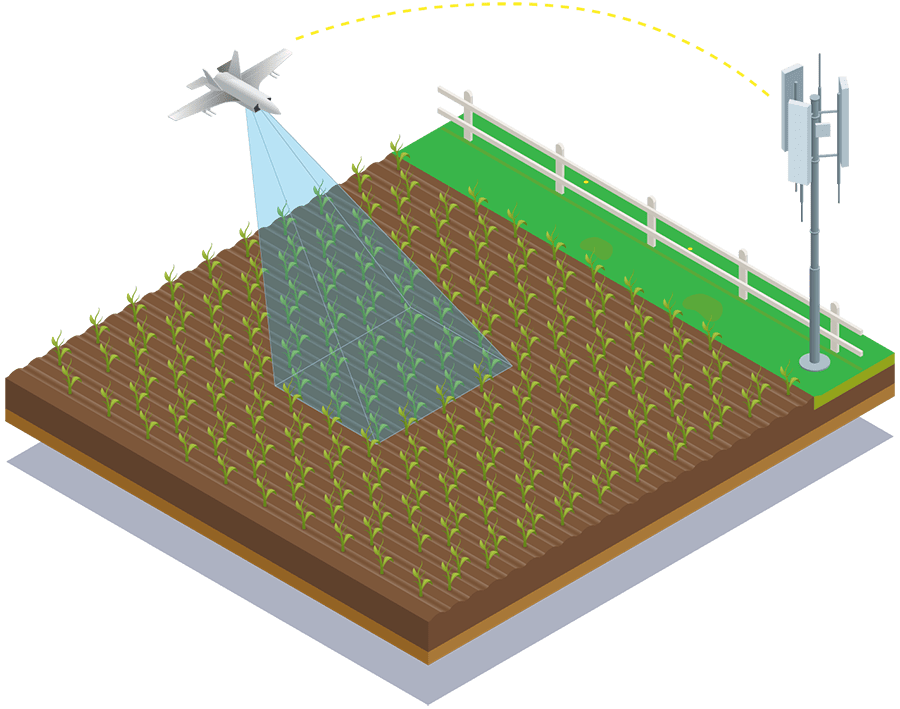
We aim to make a specialized drone that will hover low above the ground at a limited speed. As the altitude descends, the horizontal speed of the aircraft must decrease. This is to reduce the risk of damage to the aircraft as well as objects or living organisms on the ground. The second aspect already closely related to the function of the drone is the higher efficiency of scanning the terrain as it lowers the horizontal speed relative to the ground.
In the second stage
We will implement a radar that detects mines and creates a map of points that will then be used by sappers (probably also automated robots) to disarm mines. We want the efficiency of the system to be close to or equal to 100%, because only then can we ensure full safety of the area after demining.
Competitive advantages
Strategic partner